Prototype Progress
There were a number of ideas and approaches we considered. This is a timeline of prototype run trials.
Idea 1
Ms. Cortez suggested we consider compressing recycling plastics together and then carving it into desired shapes.
Issues: Resin or epoxy produce off gas (can't use). Compressed trash would fall apart and not stay together. Did not test as we had come up with another idea already.

Idea 2
Nasa Hunch released materials that we could utilize. Analyzed them and realized that plastic water bottle caps are polypropylene (PP) or high-density polyethylene (HDPE), which are both strong, durable thermoplastic polymers. We chose to begin melting them with an iron. That same day, we invested in a Mini me (mini pancake maker). Melted the water bottle caps much faster than the iron.

Idea 3
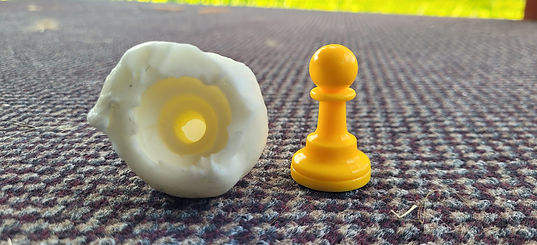
Make molds from corn starch and 100% clear silicone caulk.
Steps:
-
Grab and place some parchment paper on table
-
Squeeze out some caulk onto the parchment paper
-
Spread enough corn starch over the caulk. (1:1 ratio)
-
Mix as if it was dough with gloves
-
Once it was at desired texture, spray chess piece with avocado oil (pawn) (or any form of oil/release agent)
-
Grab dough like mixture and wrap it around the traditional chess piece
-
Wait until it dries (2-3 hour wait time)
Idea 4
Same approach as idea 3 BUT made the desired pieces with air dry clay, waited until they were completely solid, and then applied the corn starch and silicone caulk method.
First trial below:
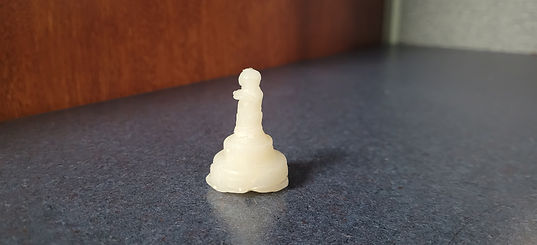
After mold dried, we took out the chess piece, and started filling the inside with the melted water bottle caps. It was a liquid that we were pouring into the mold. To ensure that everything was spreading evenly we used tweezers and tried our best to spread the melted water bottle caps.
Idea 5
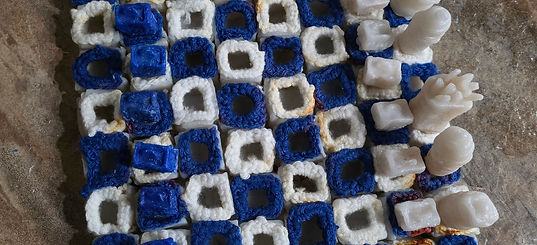
As for the interlocking joints, the original idea was to cut out pieces of polyester fabric from clothes we didn't utilize anymore and melt it on top of the boxes we made for the board. However, after much consideration we decided that it was not the best way to go about it because it would wear out easily. That is when we chose to do crocheting interlocking joints but with 100% polyester fabric.